

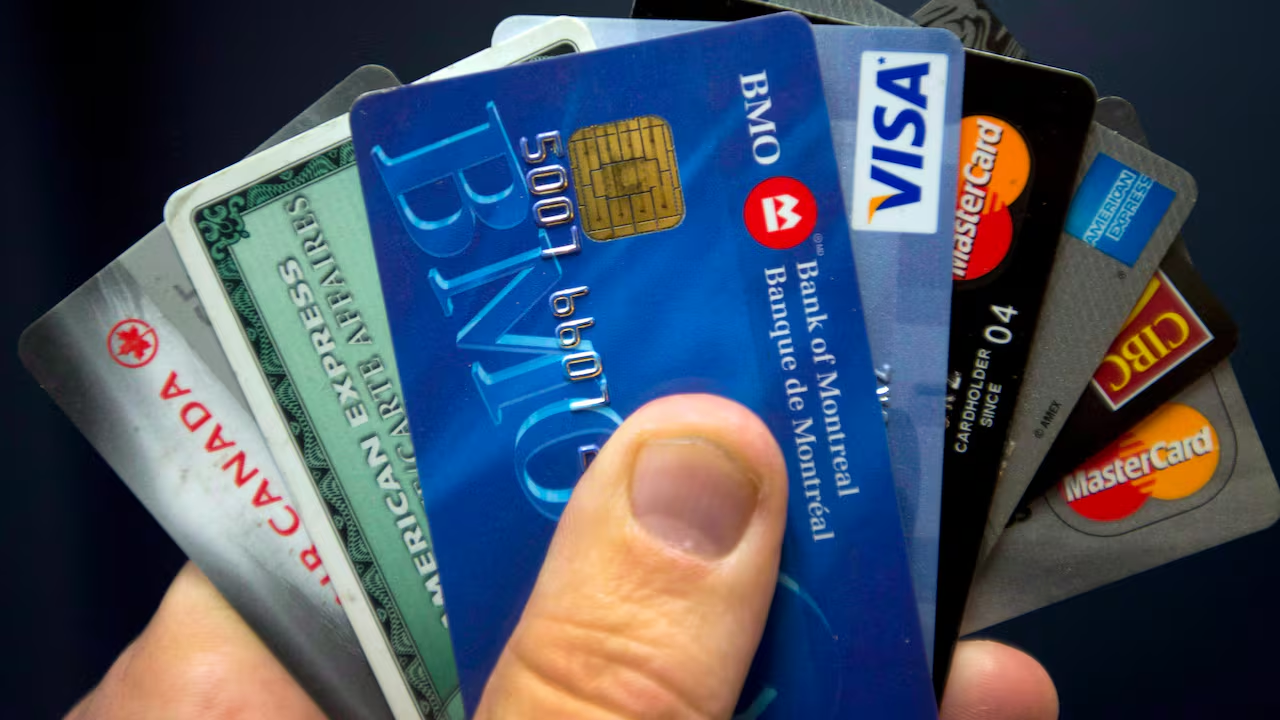
WHY CREDIT CARDS CONFUSE SO MANY PEOPLE
A credit card (or charge card) is a payment card, usually issued by a bank, allowing its users to purchase goods or services, or withdraw cash, on credit.
Using the card thus accrues debt that has to be repaid later.
Credit cards are one of the most widely used forms of payment across the world.
A regular credit card differs from a charge card, which requires the balance to be repaid in full each month, or at the end of each statement cycle.
In contrast, credit cards allow consumers to build a continuing balance of debt, subject to interest being charged at a specific rate.
A credit card also differs from a charge card in that a credit card typically involves a third-party entity that pays the seller, and is reimbursed by the buyer, whereas a charge card simply defers payment by the buyer until a later date.[citation needed]
A credit card also differs from a debit card, which can be used like currency by the owner of the card.(source Wikipedia)
Credit cards are marketed as:
- Convenient
- Rewarding
- “Free money”
But in reality, they are:
-
Debt tools
-
Interest machines
-
Psychological traps when misunderstood
Most people don’t fall into debt because they’re irresponsible —
they fall into debt because no one explained the rules clearly.
This guide explains credit cards and debt in plain language, without finance jargon.
Read Also>>>> High-Yield Savings Accounts of 2026: Rates, Features & Which One Is Worth Your Money?
1️⃣ Credit Cards Are Short-Term Loans (Not Extra Income)
A credit card is borrowed money, not an extension of your salary.
When you swipe:
- The bank pays the merchant
- You owe the bank
- Interest starts counting if unpaid
Understanding this single truth changes everything.
Explore More Smart Money Guides on RevNet
2️⃣ Interest Is How Banks Make Most of Their Money
Interest is:
- The fee you pay for borrowing
- Calculated as a percentage (APR)
Example:
- ₦100,000 debt
- 30% APR
- You owe ₦130,000 yearly if unpaid
Minimum payments keep you paying interest longer.
3️⃣ Minimum Payments Are Designed to Keep You in Debt
Banks allow minimum payments because:
- You stay compliant
- Interest continues
- Debt lasts years
Paying only the minimum is like:
Running on a treadmill — lots of effort, no progress.
4️⃣ Credit Scores Measure Trust, Not Wealth
A credit score shows:
- How reliably you repay debt
- How risky you are as a borrower
It does NOT measure:
- Income
- Net worth
- Intelligence
High scores come from good habits, not high salaries.
Explore More Credit Cards Holder
5️⃣ Late Payments Damage Credit Faster Than You Think
One missed payment can:
- Lower your score
- Stay on your record for years
- Increase future interest rates
Automation and reminders are critical.
Read>>>> 9 Powerful Pet Insurance Truths Every Smart Pet Owner Must Know Before Choosing a Policy (2026 Comparison Guide)
6️⃣ Using Credit Cards Isn’t Bad — Misusing Them Is
Healthy credit card use:
- Pay balance in full
- Track spending
- Use rewards wisely
Unhealthy use:
- Carrying balances
- Using cards for emergencies repeatedly
- Ignoring statements
Explore More Credit Cards Holder
7️⃣ Rewards Don’t Matter If You Carry a Balance
Cashback and points are useless if:
- Interest exceeds rewards
- Spending increases just to earn points
Banks love reward chasers who carry debt.
🧾 CREDIT CARDS & DEBT MANAGEMENT REVIEW BOX (HTML)
8️⃣ Debt Snowball vs Debt Avalanche (Explained Simply)
Debt Snowball:
- Pay smallest debts first
- Motivational wins
Debt Avalanche:
- Pay highest interest first
- Saves more money
Choose based on your psychology, not just math.
9️⃣ Consolidation Can Help — Or Hurt
Debt consolidation:
- Combines multiple debts into one
It helps if:
- Interest is lower
- Spending habits change
It hurts if:
- You keep using old cards
- Discipline doesn’t improve
🔟 Emotional Spending Is the Real Enemy
Most debt comes from:
- Stress
- Lifestyle pressure
- Emotional purchases
Budgeting alone doesn’t fix emotional spending — awareness does.
Explore More Smart Money Guides on RevNet
1️⃣1️⃣ Credit Utilization Affects Scores More Than You Think
Utilization = how much of your limit you use.
Rule of thumb:
- Below 30% is good
- Below 10% is excellent
High limits help only if balances stay low.
1️⃣2️⃣ Closing Cards Can Lower Your Credit Score
Closing old cards can:
- Reduce credit history length
- Increase utilization
Sometimes keeping a card open (unused) is smarter.
1️⃣3️⃣ Emergency Funds Prevent Debt Spirals
Debt often starts with:
- Medical bills
- Car repairs
- Job loss
An emergency fund protects you before debt happens.
1️⃣4️⃣ Budgeting Is About Awareness, Not Restriction
Budgets aren’t punishment.
They’re clarity tools.
You can’t fix what you don’t track.
Editor’s Choice Review>>>> 12 Powerful Home Fitness Equipment Essentials That Actually Work for Beginners (2026 Honest Guide)
1️⃣5️⃣ Debt Is a Math Problem — And a Behavior Problem
Interest is math.
Overspending is behavior.
Both must be addressed.
1️⃣6️⃣ Financial Freedom Is Built Slowly, Not Instantly
There are no shortcuts.
No “hack” erases debt overnight.
Consistency beats intensity.
1️⃣7️⃣ Knowledge Is the Cheapest Financial Tool You’ll Ever Use
Understanding money:
- Saves thousands
- Reduces stress
- Builds confidence
And it costs nothing but attention.
FINAL THOUGHTS:
CONTROL YOUR MONEY OR IT CONTROLS YOU
Credit cards aren’t evil.
Debt isn’t shameful.
But ignorance is expensive.
When you understand the system, you stop being a victim of it.


Leave a Reply